
Why the Middle of the Year Can Feel Like Relief and Guilt at Once (And Why That Makes Sense)
By Chloe N., BA(Psych)
Founder of The Simplified Self & Women's Wellbeing Educator
Feeling relieved the year's half over, and feeling guilty about that relief, aren't opposites. They're separate, and completely true things that can turn up at exactly the same time.
I noticed it in myself this year. I caught myself thinking it, thank goodness, we're halfway through the year. Right after that, came the other thought. Shouldn't I have more to show for six months? Shouldn't I feel a bit further along with what I wanted to achieve by now, why don't I feel little lighter or more on top of things?
Both feelings, the relief and the guilt, were real. Neither cancelled the other out.
For some of us, the middle of the year means the middle of winter. A pile of end-of-financial-year admin. And for others it's the start of a hot, kid-filled summer. Either way, it puts a marker down, whether we are ready or not.
Relief and guilt showing up together isn't something to untangle or fix. It's just two ways of feeling about the same six months.
Why relief and guilt tend to show up together here
Relief at the halfway mark makes a lot of sense, actually. A long stretch of pushing through has just passed, and part of you registers that before your thinking brain catches up. And it's usually not laziness talking. It can be your nervous system easing off a little once it senses the pressure has actually let up.
The guilt is a different story. A lot of us carry this quiet, unspoken rule that time passing should come with proof. Proof you've made progress, proof something's changed. So when July rolls around and that proof isn't obviously sitting there, relief can start to feel like something you need to apologise for. As if being glad the year's moved on is only allowed once you've actually earned it.
You haven't done anything wrong by feeling both, though. You're just holding two different ways of measuring at once: one that tracks how tired you are, and one that tracks how much you've got to show for it. Right now, smack in the middle of the year, they just don't agree.
What the guilt tends to actually be about
Underneath it all, the guilt is rarely about the calendar. It's usually about an old, tired story: the one that says struggling should look like something. If this year's felt hard without an obvious turning point, that story insists you must have got the approach wrong somewhere.
It gets sharper the moment someone else's six months looks like it landed somewhere. A finished renovation, or a friend's "best year yet" post showing up in your feed at exactly the wrong moment. Their year having a shape doesn't mean yours needed one too.
Maybe it's the resolution you set back in January and haven't thought about since March. There's a gentler way to look at that one, too: there can be relief in it as well, not just guilt. Relief at not having to carry it around anymore.
Whichever version shows up for you, here's what I've noticed, again and again, working with people carrying a lot. Most people have been trying this whole time, genuinely trying and the problem was never effort. The load hasn't let up long enough for the trying to actually land anywhere. So, a body under pressure for six months straight barely gets the opportunity to really settle.
Why this isn't a sign something's wrong with you
None of this means you're behind. It doesn't mean you've handled the year badly, either. Six months of carrying a full plate is six months of carrying a full plate, whether it left you with a neat little before and after, or not.
So maybe try holding this instead: relief doesn't need a receipt. You're allowed to feel it without earning it first. That's what permission to rest actually means, even if it's easy to forget to apply it to yourself.
If any of this is landing for you, you're not alone in it, and you're definitely not doing the year wrong. Right now, a lot of us are standing in exactly this spot: quietly relieved, and quietly a bit unsettled, about the very same six months.
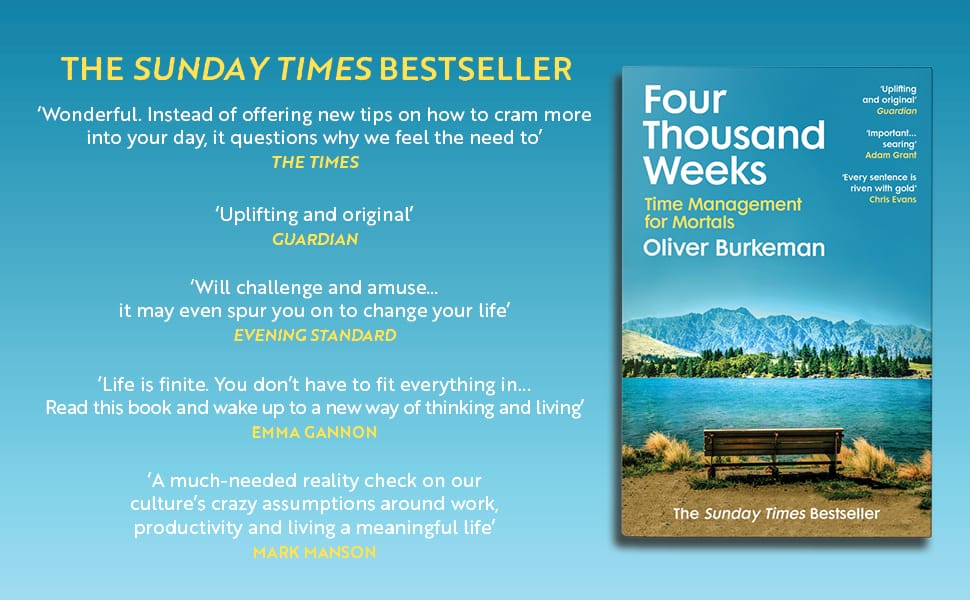
If you want to sit with this feeling a bit longer, Oliver Burkeman's Four Thousand Weeks does it better than most. It's essentially a whole book on why we were never going to feel caught up in the first place, and somehow that ends up being the comforting part. Find out why here.
You're allowed to be glad the year's half over.
Explore The Simplified Self's growing collection of tools and resources, here.
Available now with instant digital access.
Commonly asked questions
For a lot of people, it's partly biology catching up before your thinking mind does, though plenty else can feed into it too. Either way, it's got nothing to do with how hard you were working.
Really common, more than you'd think. Not seeing visible change doesn't mean nothing happened underneath it. Effort without an obvious turning point is still effort. It still costs you something.
Guilt tends to creep in when relief shows up without visible proof standing next to it. It usually comes from a belief that relief has to be earned first.

About the Author
Chloe N, BA(Psych)
Founder of The Simplified Self & Women's Wellbeing Educator
The Simplified Self is trusted by a community of people across more than 10 countries.
Chloe is the founder of The Simplified Self, bringing more than a decade of professional experience working with people facing complex circumstances, stress and significant life challenges. Her background spans Victorian government and community services, including senior and specialist roles involving counselling, alcohol and other drug services, complex case management, assessment, client education and behaviour change. Her work has also included mentoring colleagues, providing secondary consultation and supporting the development of other professionals.
Chloe holds a Bachelor of Arts (Psychology) from Deakin University and she's completed extensive professional development across areas including motivational interviewing, cognitive behavioural approaches, trauma-informed practice, grief and loss, family violence and alcohol and other drug work. She also holds internationally accredited certifications in somatic coaching, breathwork, meditation coaching and polyvagal approaches, extending her knowledge of body-based practices, stress responses and nervous system concepts.
Find out more, here.
The Simplified Self exists because carrying too much for too long doesn't mean something is wrong with you, it means your human. What tends to help isn't more advice, it's something gentle enough to actually meet you where you are.
This post is for education and general information. It isn't therapy, medical advice, or a substitute for professional care, and it can't take your individual situation into account. If you're struggling, please reach out. Lifeline 13 11 14 (AUS), 988 (US and Canada), or findahelpline.com.
This post contains affiliate links. As an Amazon Associate I earn from qualifying purchases, at no extra cost to you. I only ever link to things I genuinely think are worth suggesting.
Experience-backed information, tools & resources to support calm, clarity and simpler living for women.
Education and tools for everyday wellbeing. Not therapy, counselling or medical/health care, and not a substitute for them. If you're struggling right now, please reach out to Lifeline 13 11 14 (AU), call or text 988 (US and Canada), or visit findahelpline.com (anywhere in the world).
© All Rights Reserved