
Why Do I Feel Overwhelmed So Easily? Why Small Things Can Feel Like Too Much and What Can Help
By Chloe N., BA(Psych)
Founder of The Simplified Self & Women's Wellbeing Educator
If small things suddenly feel like too much, maybe it's because they’re landing on top of everything else you’re already carrying. Maybe you're not actually overwhelmed “too easily”. Maybe it's just that the thing tipping you over is the latest demand in a day that's already taken so much from you.
Maybe you didn't get a good sleep. Maybe you're dealing with work or caring pressure, sensory load or a pile of unfinished things on your mind.
All of these things can contribute to that "ordinary" stuff starting to feel hard.
Imagine this. You open your laptop to send an email. Just one. That should be manageable you think to yourself. Then you remember the washing's still wet in your washing machine and maybe your phone just lit up for the second time with a message you haven’t had a chance to open yet. Suddenly someone's asking you what’s for dinner and all of a sudden, something in you goes, Nope. Too much.
If this feels familiar, you're not alone.
And you're definitely not alone if next comes the self-commentary. Why can’t I just get on with it? Why does it feel like such a big deal?
What overwhelm can look like in everyday life
Overwhelm is what can happen, when what’s being asked of you feels bigger than the capacity you have available right now.
Maybe you open an email, read two lines and close it again because your brain's decided words aren’t happening today. Maybe you sit in the car outside the supermarket for another five minutes because walking through the doors in that moment, just feels too much.
You might still look completely capable from the outside, getting through your workday, then someone asks where the clean towels are when you get home and that’s what does it.
The towels aren’t really the problem. But it is what happened after everything else.
While the final trigger might seem small, all you're carrying underneath it, might not be.
Why small things can feel overwhelming when you're already carrying a lot
Instead of asking yourself, why can’t I handle this? It can be helpful to consider asking yourself, what was already taking up space before this?
Being asked to get milk on an ordinary afternoon's one thing. Where as being asked to get milk after a terrible night’s sleep and an appointment that ran late, can feel completely different.
It's the same carton of milk. But it's a very different afternoon.
Capacity isn’t fixed. It can change and fluctuate. Sleep and health can affect it, while stress and the amount of recovery you’ve had can change how manageable a demand feels.
Mental load can make simple decisions feel harder
Perhaps you’re replying to an email when you remember there’s a bill you need to pay. Then someone asks you, what's for dinner? At work, it might be unread Teams messages and an email marked urgent. A meeting is coming up, and somebody leans over your desk to ask whether you’ve “got a quick minute”.
By the time someone asks you to make another decision, your brain's already made plenty. Dinner might just be decision number 47.
Sensory load can make ordinary environments harder to manage
The TV's on and your phone keeps vibrating against the table. Then your bra becomes the most irritating object ever manufactured. Everyday sounds or clothing can feel much more intense, and sensory tolerance can change depending on things such as how tired you are, your physical health, masking and stress.
If you're autistic, the National Autistic Society has shared sensory triggers may be more likely to become overwhelming if those factors are already taking a toll.
So, a supermarket that could feel manageable one day, might be much harder or outside your capacity after a draining afternoon. You're not being "silly" or "too sensitive".
How manageable an environment feels, can be useful information when taken into consideration with what might already be demanding your attention.
Perfectionism can make small tasks much bigger
A message that'd ordinarily take you two minutes can quickly become a whole lot more if you start trying to word it perfectly or thinking about whether the tone sounds right or predicting how the other person might respond. Even though the actual task or "thing" hasn’t changed, the amount of thinking and cognitive effort wrapped around it, has.
Unexpected changes may take more effort to process
Have you ever mentally prepared for an appointment? You know when you’re leaving and roughly how your day should go, then the plan changes?
Some people can switch gears quickly and others may need more time or find it more difficult to process the change. Processing change can be harder for some people due to a variety of psychological and neurological factors. Understanding these factors (things like brain structure, resistance to change, fear of the unknown, loss of control and past experiences), tends to help people approach change with patience and more compassion.
It can be helpful to recognise change, including unexpected change, is natural and a normal part of life. How much effort or how fast we can process change, isn't a reflection of intelligence, but is shaped by a wide range of factors. Neurodiversity, anxiety, sensory overload, learning differences and personal characteristics are all examples of factors which can influence processing speed and effort.
Other things can contribute to feeling overwhelmed
Overwhelm doesn’t always come down to mental load or the nervous system. Poor sleep and illness can also influence how much capacity you have. Ongoing stress, hormonal changes or mental health challenges can matter too, which is one reason to keep an open mind. Not every difficult sensation means your nervous system needs “regulating”.
Healthdirect notes stress can involve feeling overwhelmed, difficulty concentrating, changes in sleep and exhaustion. It also points out persistent stress can sometimes be a clue something else may need some attention.
Why overwhelm can build quietly for women
Australian Bureau of Statistics (ABS) Time Use Survey data published late 2022 found women were more likely than males to participate in most types of domestic activities (including housework, food and drink preparation/service and shopping). It also found more female parents of children under 15 years participated in childcare activities (including physical and emotional care, teaching, helping, playing, talking, minding and feeding children), than male parents. More than a third of females reported always or often feeling rushed or pressed for time, with women 35 to 44 year's most likely.
On average, women spent longer on committed time (unpaid domestic work, childcare, adult care and voluntary work), compared to men who spent more time on free time activities (such as social interactions, going out and watching TV).
While those numbers can’t explain why any individual woman feels overwhelmed, they can remind us of some of the very real demands on most women's time and energy.
How your nervous system may be involved in overwhelm
Your nervous system receives information from inside your body and from the world around you, then helps coordinate your responses. Under stress, you might notice concentrating gets harder or your body feels more restless than usual. You might speed up and try to finish everything or desperately want people to stop asking you questions.
Your reactions can be useful clues.
What you can do when everything feels like too much
Start with one question: What could make the next few minutes easier?
You might need:
Less noise or input
More time before answering
Something predictable
Food or a drink
To stop for now
Help with one thing
Permission for “good enough” to be enough today
You don’t need to work through the whole list. One useful thing could be enough. Maybe the television goes off and dinner becomes something simple. Maybe you sit down before making another decision. Maybe you could tell somebody, “Give me ten minutes and ask me again.”
And if focusing on your breathing feels supportive, a few comfortable, unforced breaths might give you a pause (if it makes you feel more wound up, leave it and try something else).
If you want something simple to reach for when you feel overwhelmed, wired, flat or unsettled, I created the Nervous System Care Cards exactly for that. They're a gentle collection of practices to support your nervous system, in one place to save you digging through saved posts or trying to remember what you read somewhere. Use them digitally or print, depending on what feels easiest and there’s no program to keep up with or right order to work through them.
Available now. Instant digital access after checkout.

Something else worth considering
A coping strategy could help you through a difficult moment, but it can’t make an unreasonable workload reasonable. It can also be worth asking: What is making this too much for me right now? Something genuinely might need to come off your plate. Maybe you actually need some practical help instead of another technique for coping with everything yourself.
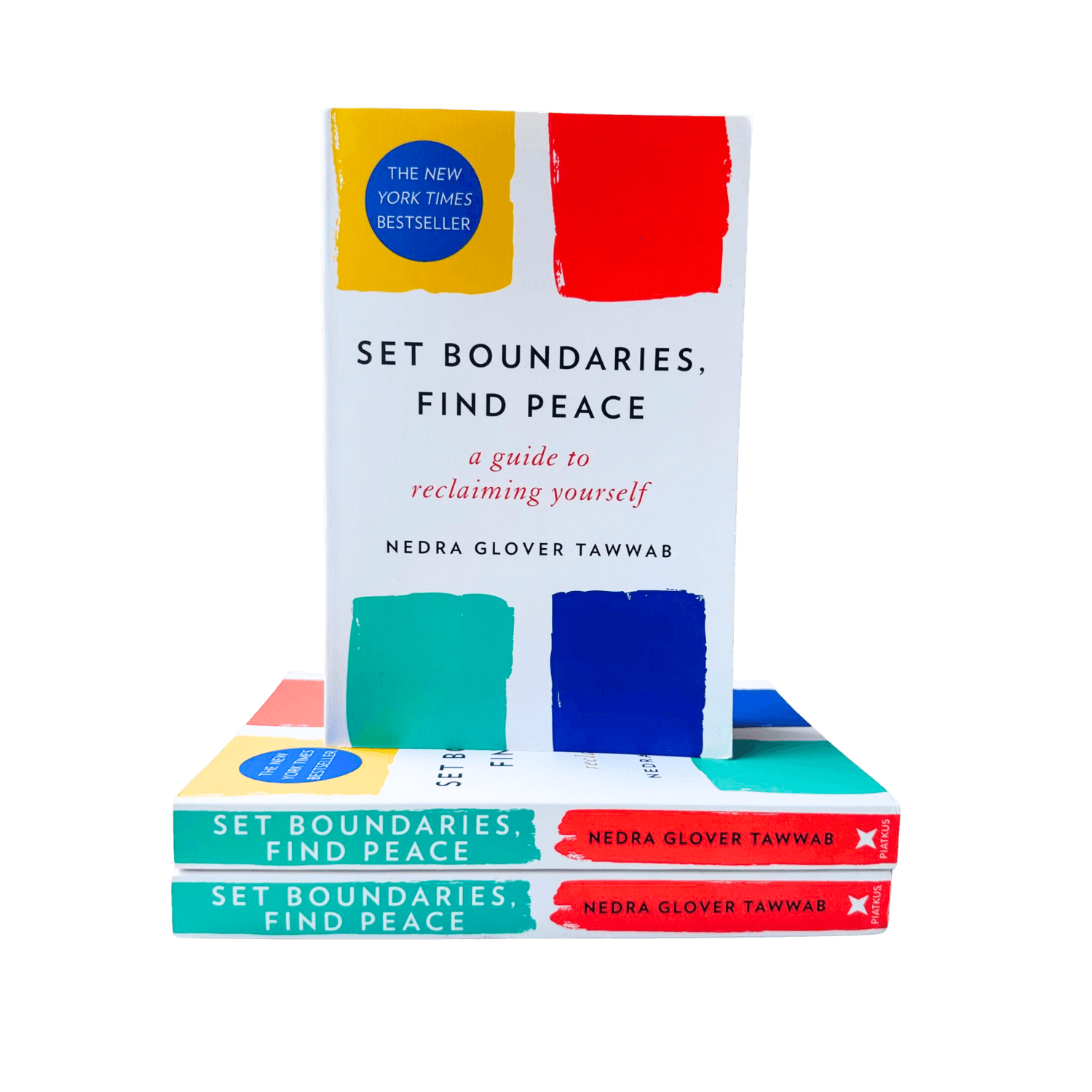
Boundaries can be part of this. Many of the women I've sat with and held space for in my work over the years, have shared how agreeing to things before considering whether they actually had capacity for them had become normal. I recognised it instantly. I've been there too. There's a wonderful and widely highly regarded book called Set Boundaries, Find Peace by bestselling author and licensed therapist Nedra Glover Tawwab. Tawaab offers practical advice for setting and communicating boundaries in everyday real life. It's empathetic and makes complex situations easy to understand. You can take a look and order it here.
"Boundaries will set you free." - Nedra Glover Tawaab
When to get more support for overwhelm
Feeling overwhelmed sometimes, is part of being human. If it keeps happening, you're struggling to cope or overwhelm starts significantly affecting your everyday life, it’s worth talking to a qualified professional. A doctor can be a good place to start.
Frequently asked questions
Sometimes the "small" thing is simply the latest thing. A simple request can feel very different when you’re already tired or carrying unfinished tasks in the back of your mind. Looking at what happened before the trigger can give you a clearer picture of why it felt like so much.
Yes. Healthdirect lists feeling overwhelmed and difficulty concentrating among signs that stress has become too much for someone. Changes in sleep and exhaustion can happen as well.
There isn’t one recognised symptom checklist that can tell you nervous system dysregulation is definitely the reason you feel the way you do. Experiences such as irritability or difficulty concentrating can have many possible causes. Looking at the wider context is usually more useful than trying to diagnose yourself from a list.
Make the question smaller. Instead of trying to fix the whole day, ask yourself: What might make the next ten minutes easier? Maybe something can wait until tomorrow. Perhaps reducing sensory input could help.

About the Author
Chloe N, BA(Psych)
Founder of The Simplified Self & Women's Wellbeing Educator
Chloe is the founder of The Simplified Self, bringing more than a decade of professional experience working with people facing complex circumstances, stress and significant life challenges. Her background spans Victorian government and community services, including senior and specialist roles involving counselling, alcohol and other drug services, complex case management, assessment, client education and behaviour change. Her work has also included mentoring colleagues, providing secondary consultation and supporting the development of other professionals.
Chloe holds a Bachelor of Arts (Psychology) from Deakin University. She's completed extensive professional development across areas including motivational interviewing, cognitive behavioural approaches, trauma-informed practice, grief and loss, family violence and alcohol and other drug work. She also holds internationally accredited certifications in somatic coaching, breathwork, meditation coaching and polyvagal approaches, extending her knowledge of body-based practices, stress responses and nervous system concepts.
The Simplified Self exists because carrying too much for too long doesn't mean something is wrong with you, it means your human. What tends to help isn't more advice, it's something gentle enough to actually meet you where you are.
The Simplified Self is trusted by a community of people across more than 10 countries.
This post is for education and general information. It isn't therapy, medical advice, or a substitute for professional care, and it can't take your individual situation into account.
If you're struggling, please reach out to Lifeline 13 11 14 (AUS), 988 (US and Canada), or findahelpline.com.
This post contains affiliate links. As an Amazon Associate I earn from qualifying purchases, at no extra cost to you. I only ever link to things I genuinely think are worth suggesting.
Experience-backed information, tools & resources to support calm, clarity and simpler living for women.
Education and tools for everyday wellbeing. Not therapy, counselling or medical/health care, and not a substitute for them. If you're struggling right now, please reach out to Lifeline 13 11 14 (AU), call or text 988 (US and Canada), or visit findahelpline.com (anywhere in the world).
© All Rights Reserved